

ARKOS 2 Wheeler Batteries
ARKOS redefines your relationship with energy. Minimize your carbon footprint.
Take control of your power costs today.
Bolt Warranty Management SystemBattery Range
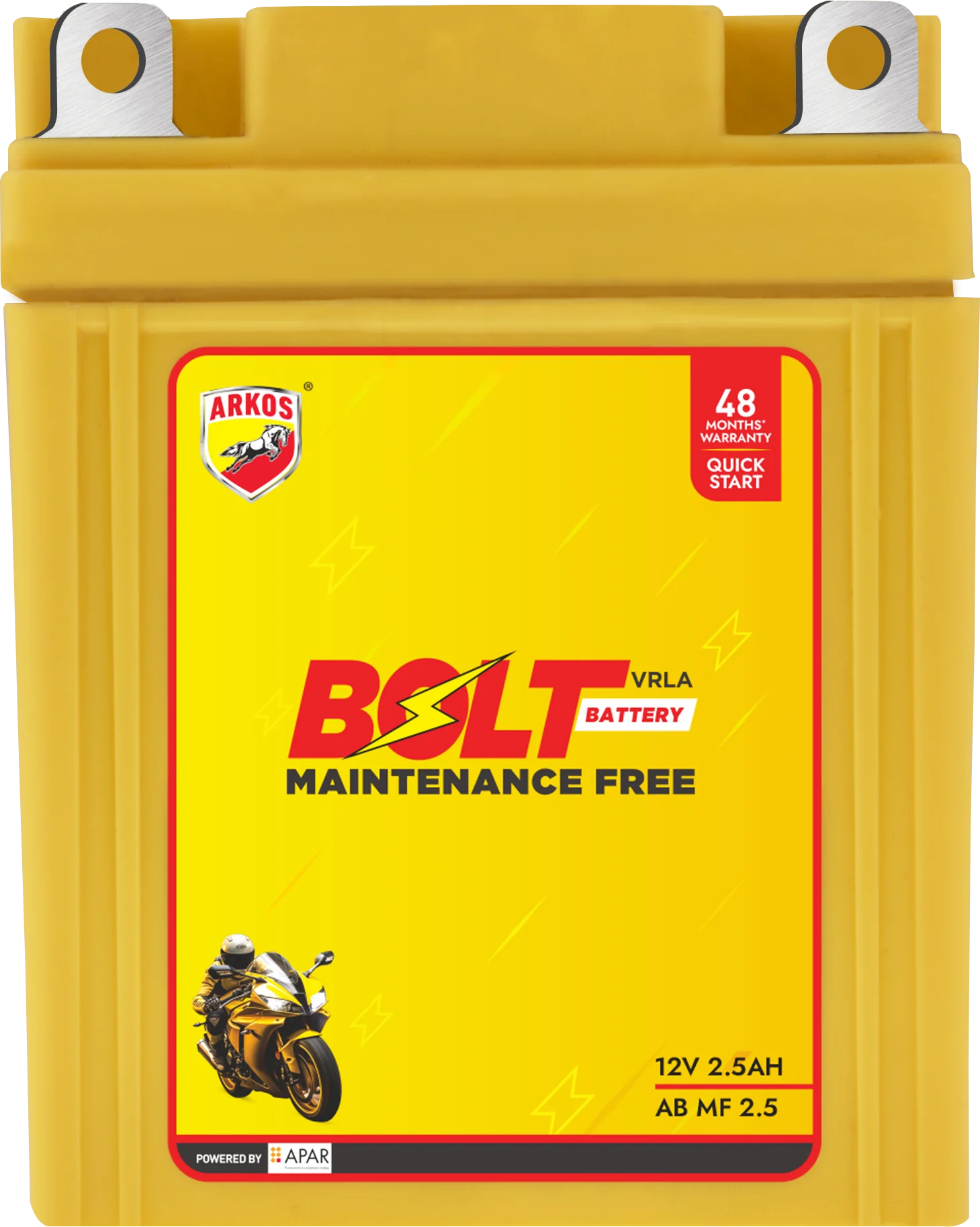
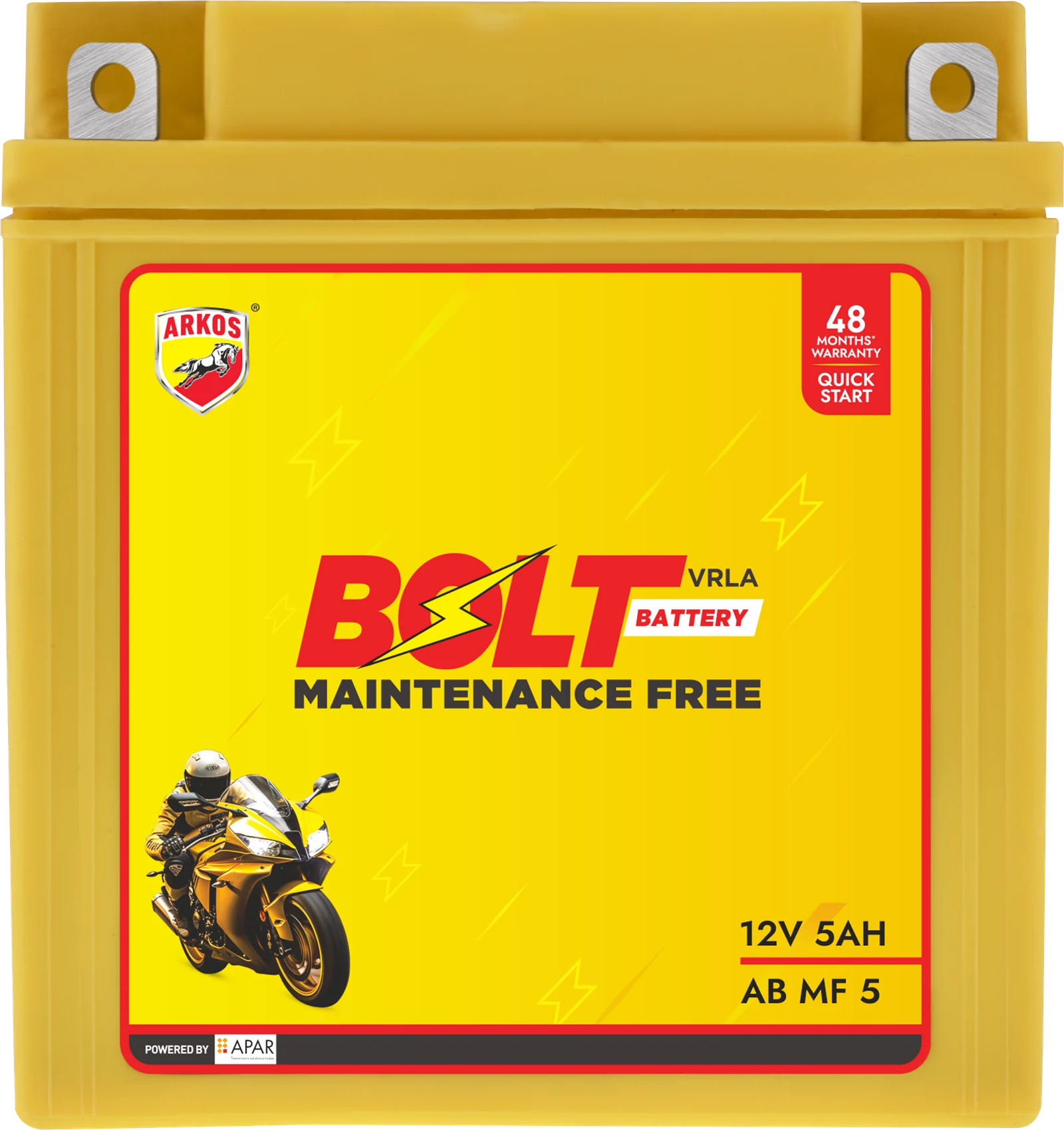
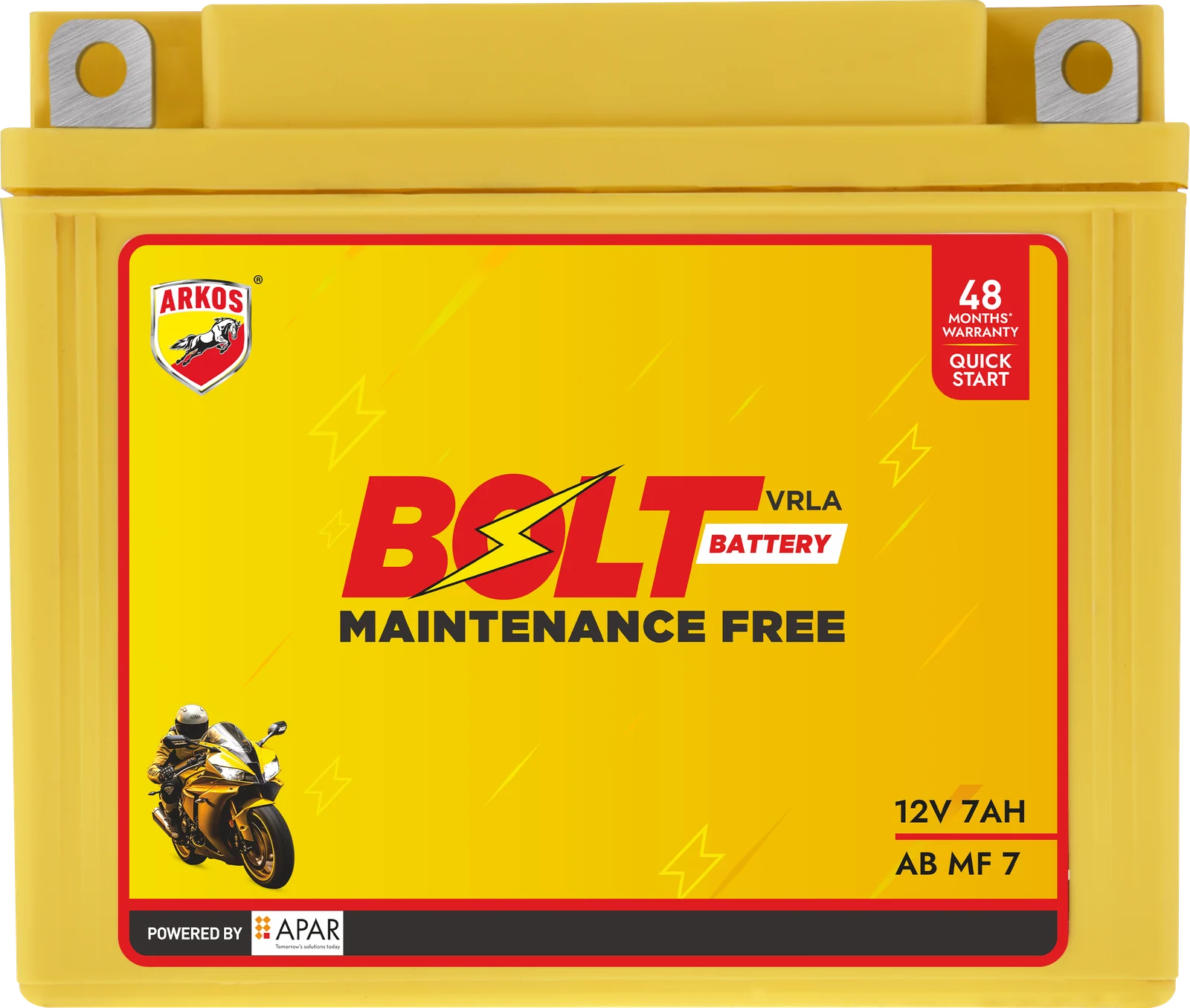
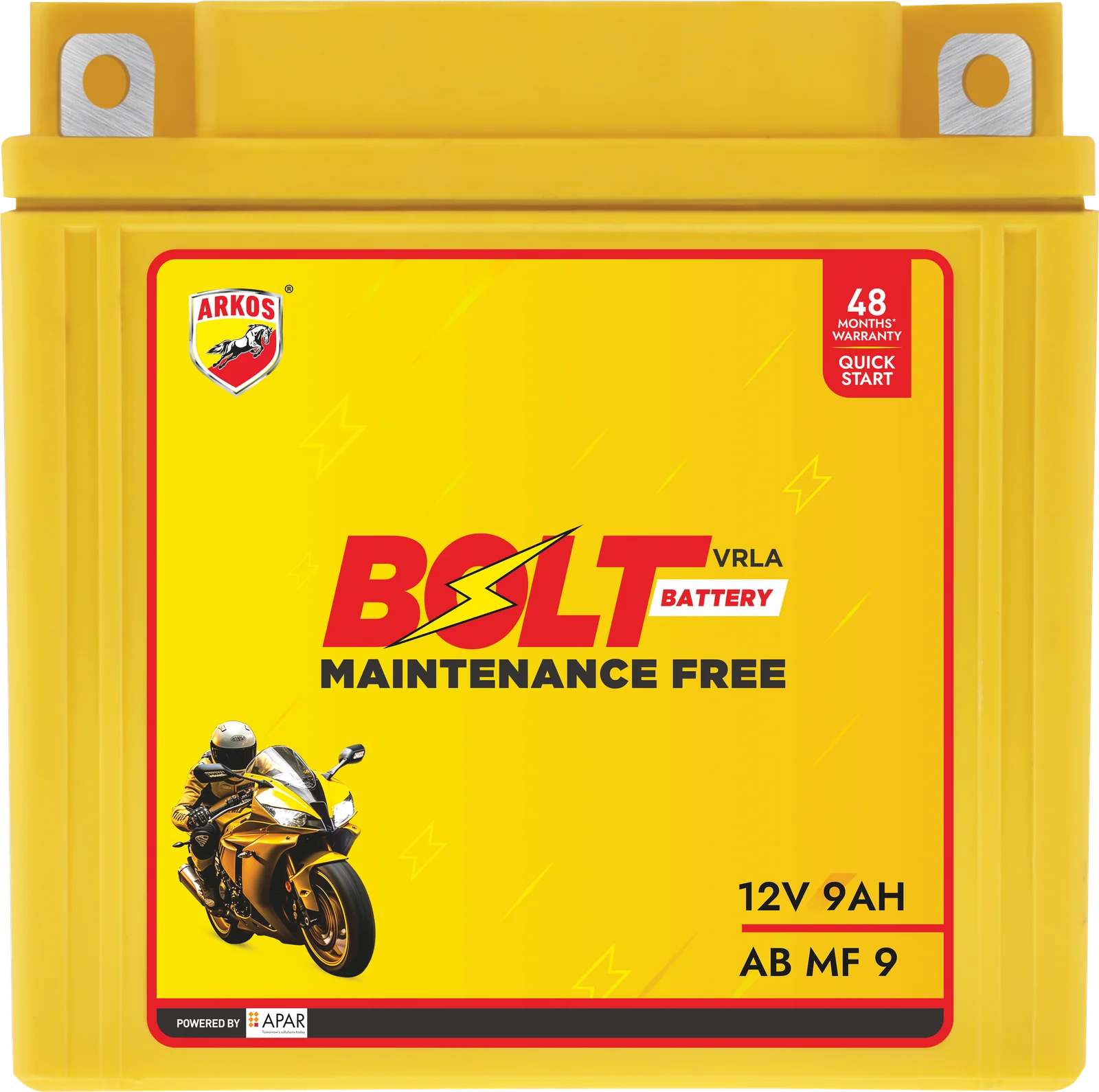
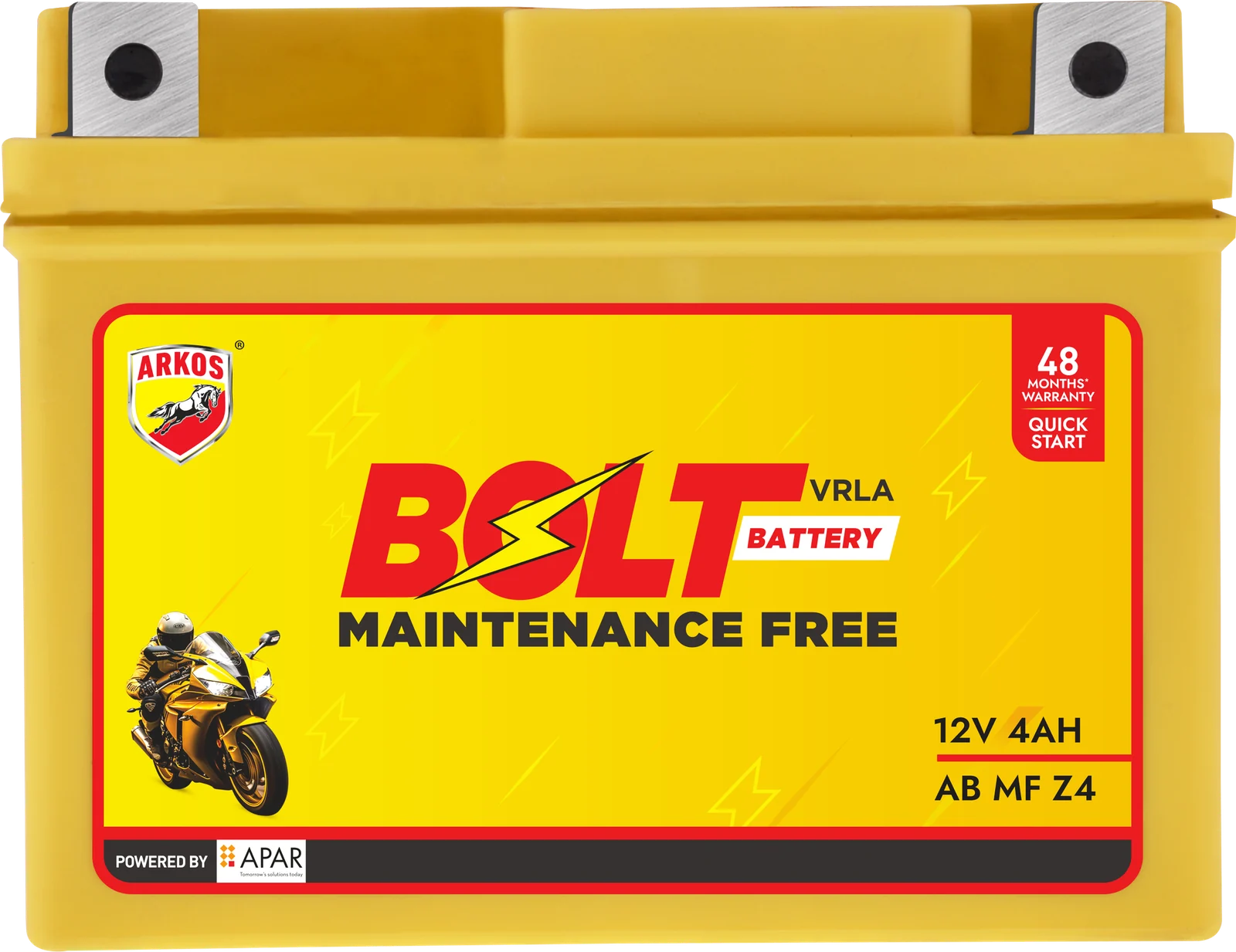
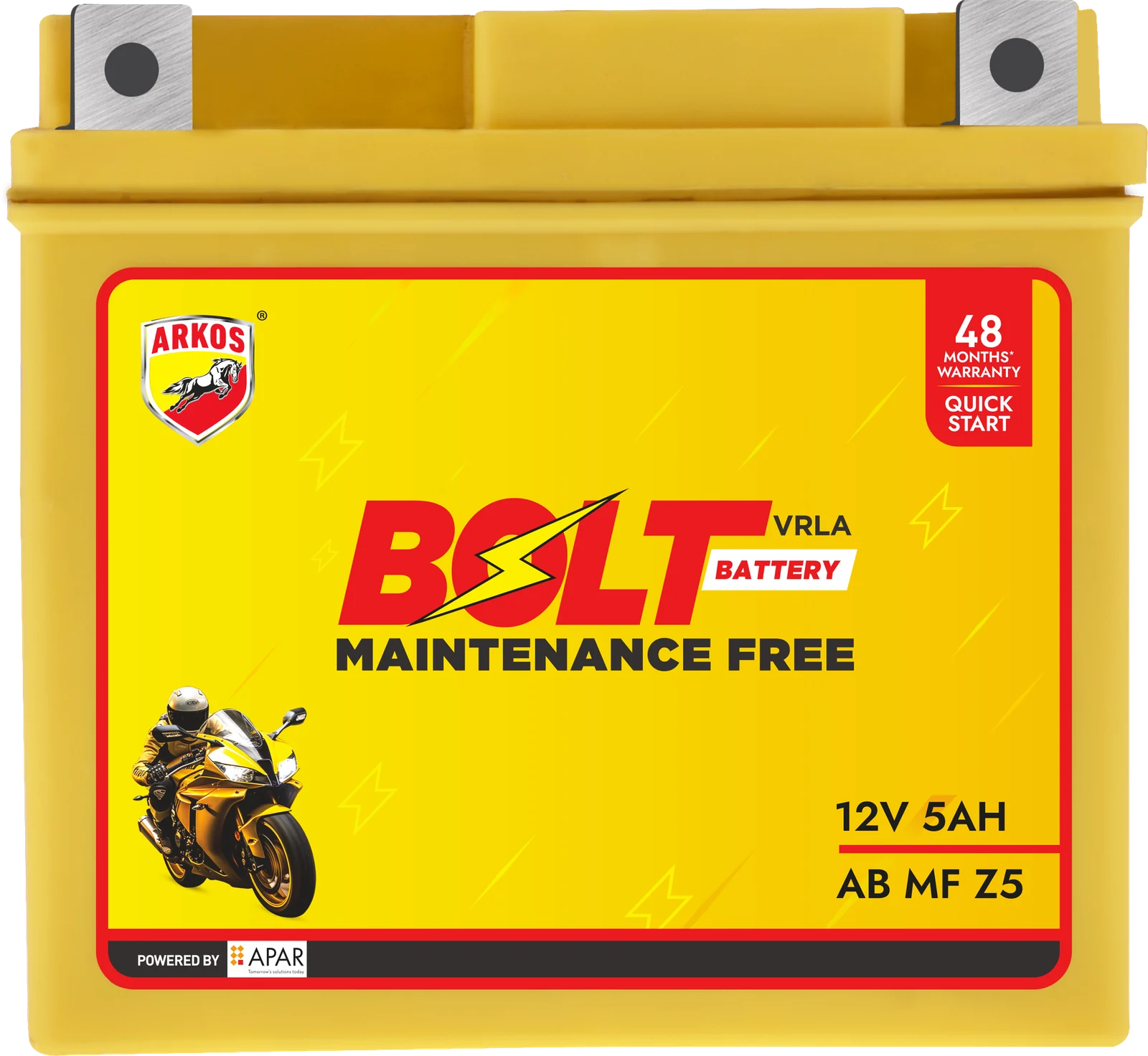
Battery Installation
Steps for Battery Installation
- 01Turn OFF the engine.
- 02Disconnect the negative cable followed by the positive one.
- 03Loosen the clamps and dismantle the battery. Avoid using a hammer on the cable terminals as it may result in damaging the lid, internal post connections or post lid insert connections.
- 04Place the new battery firmly in the cradle and check if the starter, alternator and voltage regulation are operating correctly.
- 05Connect the positive cable and then the negative cable.
Care Guidance
Dos and Don’ts
Dos
When cleaning your battery, use a moist cotton cloth and disconnect the negative cable before the positive one. Next, tighten your clamps and apply petroleum jelly. Check the output of the voltage regulator as both overcharging and undercharging can reduce the life of the battery. Recharge your battery only at the recommended current.
Don’ts
Avoid storing the battery sideways. Do not install a lower capacity battery than recommended or interfere with the current charging setting in order to quickly charge the battery as this will seriously affect the battery’s life. While charging, do not connect or remove the battery from the charging circuit while the charger is on; wait till the display shows charge finish.
BOLT Battery Help
Two-wheeler battery FAQs
Practical guidance for battery selection, care and replacement. Always follow the vehicle manufacturer's specifications and use a qualified technician where required.
01 How does a two-wheeler battery operate?
A two-wheeler starter battery stores chemical energy and supplies direct-current power when the ignition or starter is used. It provides the short burst needed by the starter motor and supports the vehicle's lights, horn, dashboard and other electrical equipment. Once the engine is running, the charging system replenishes the battery.
02 What should I consider when buying a bike or scooter battery?
Always begin with the battery specification in the vehicle manufacturer's manual. The replacement must match the vehicle's electrical and physical requirements.
- Use the recommended battery type, nominal voltage and ampere-hour (Ah) rating.
- Check the case dimensions, terminal position and mounting arrangement.
- Choose a recently manufactured battery from a reliable source.
- Review the warranty and available service support.
- Confirm compatibility with the exact vehicle make and model before installation.
03 How do I know if my bike or scooter battery needs replacement?
Warning signs include slow cranking, repeated clicking without a successful start, dim or flickering lights, frequent jump-starts, or a battery that repeatedly loses charge. Swelling, cracks, leaks or heavily corroded terminals require prompt inspection. Battery life varies with use, climate, charging condition and maintenance, so have the battery and charging system tested before replacement.
04 What can excessive temperature do to a two-wheeler battery?
Excessive heat accelerates internal chemical reactions and can shorten battery life. It may increase electrolyte loss in serviceable batteries, speed up plate corrosion, reduce charge retention and, in severe cases, deform the case. Park in shade where practical, keep terminals clean and have the charging system checked if the battery becomes unusually hot or repeatedly overcharges.
05 What do volts and Ah mean?
Volts (V) describe the battery's nominal electrical potential, while ampere-hours (Ah) describe its rated capacity. Many petrol two-wheelers use a 12 V starter-battery system, but the correct voltage and Ah rating must always match the vehicle manufacturer's specification. A higher Ah number is not automatically a suitable upgrade if the dimensions or charging system are incompatible.
06 What is the difference between a flooded lead-acid battery and a VRLA battery?
Both are lead-acid batteries. A conventional flooded battery contains liquid electrolyte and may require periodic electrolyte-level checks where the design permits. A valve-regulated lead-acid (VRLA) battery is sealed, spill-resistant and generally maintenance-free in normal service. Use only the battery construction specified for the vehicle and never open a sealed VRLA battery.